

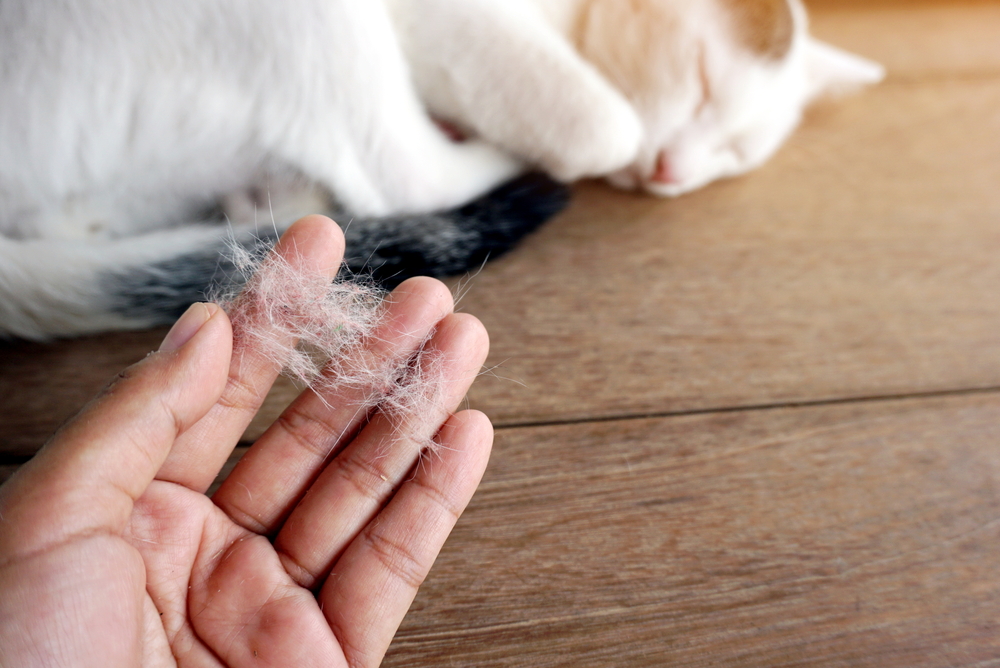
A patch of missing fur is not the same as the hair you sweep up every spring, and telling the two apart is the first step toward fixing it. Alopecia is simply the medical word for hair loss, and it is a symptom rather than a disease of its own. The cause usually sits in one of two very different places: a hormone problem like thyroid or adrenal disease, or a skin problem like allergies, mites, or infection. That distinction matters because each calls for completely different treatment, and guessing wrong wastes time your pet does not have to spend itchy. The reassuring part is that once we pin down which one it is, most pets improve a great deal.
At Memorial Villages Animal Hospital in Houston, we sort out hair loss with a hands-on skin exam plus the in-house tools that point to a cause, including skin scrapings, cytology, fungal cultures, and hormone bloodwork run through our on-site lab. If you have noticed thinning fur, bald patches, or constant scratching, book a visit with us and we will find out what is behind it.
The Short Version, If You Only Read One Thing
- Alopecia is a symptom, not a diagnosis, and the same bald patch can trace back to hormones, allergies, parasites, infection, breed genetics, stress, pain, or nutrition.
- Itchy, patchy hair loss usually points to a skin problem, while smooth, symmetrical thinning without much scratching more often points to a hormone imbalance.
- We rely on in-house digital imaging including ultrasound and radiography alongside skin scrapings, cytology, fungal cultures, and bloodwork to find the cause instead of guessing at it.
- Most pets regrow their coat once the right diagnosis leads to the right treatment, so early evaluation genuinely pays off.
Which Coat Changes Mean You Should Not Wait to Call?
Not every bald spot is a crisis, but a few patterns are worth a same-week appointment rather than a wait-and-see approach. Alopecia points to something underlying rather than being a disease in its own right, so the sooner you flag it the sooner we can act.
Normal shedding is diffuse and even, leaving the coat thinner but still covering the whole body, while true hair loss leaves visible patches, bald spots, or damaged fur in specific places. Watch for a few things the spring shed does not cause:
- Barbering, where a pet chews the hair down to a stubbly, broken layer
- Patchy or localized thinning that does not follow the usual seasonal pattern
- Redness or scaling on the skin underneath
- Hair that comes out and does not grow back
- Scratching, licking, or nibbling aimed at one or two specific areas rather than an all-over itch
Any of those is worth a closer look. Skin and coat get a careful check during every wellness exam, so if something is off, an appointment is a good place to start.
When the Coat Thins Evenly and the Itch Is Missing, Think Hormones
When hair thins symmetrically down both sides of the body and your pet is not particularly itchy, hormones move to the top of the suspect list. Hormonal hair loss tends to be gradual and quiet, creeping along slowly enough that many families do not notice until a good portion of the coat is already thin.
Which Hormone Problems Affect the Coat?
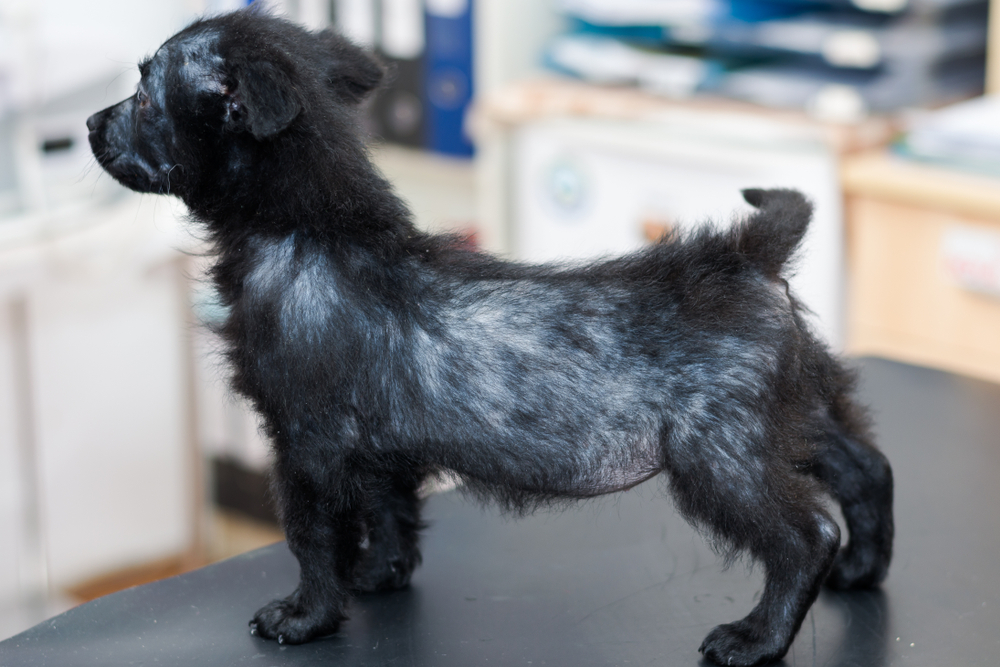
Two glands cause most of the endocrine hair loss we see. In dogs, hypothyroidism slows the whole system when the thyroid stops making enough hormone, thinning the coat symmetrically while the pet gains weight and loses energy. Cushing’s disease comes at the coat from the other direction, flooding the body with cortisol and producing symmetrical thinning alongside a bigger appetite, more thirst, and a pot-bellied look. Cats have their own version: hyperthyroidism can leave the coat patchy and unkempt, usually paired with weight loss, a big appetite, and restlessness.
Can Sex Hormones or My Own Medications Play a Role?
They can, and this is where a few surprising causes hide. In an intact male dog, symmetrical hair loss can trace back to testicular tumors that pump out excess estrogen, and neutering frequently allows the coat to grow back. Intact females can show similar symmetrical changes tied to their own hormonal fluctuations, and spaying often settles those cases too. A more surprising source is the medicine cabinet: hormone replacement creams rubbed onto human skin can transfer to a pet through cuddling or a lick of the application site, disrupting the coat with hormonal imbalances. If anyone in the home uses a topical hormone gel, mention it at the visit.
Why Does Routine Blood Work Matter for the Coat?
Hormone imbalances usually show up in the blood before they show up in the mirror. A thyroid or cortisol problem can be well underway on lab values while the coat still looks mostly normal, and baseline numbers from healthy years make it far easier to spot a meaningful shift. That is one reason we fold routine bloodwork and endocrine screening into wellness visits rather than waiting for a visible problem.
When an Itchy Pet Is the One Damaging Their Own Coat
Allergies sit near the top of the list of reasons pets lose fur, because an immune system that overreacts to a trigger sets off inflammation and itching, and the scratching that follows is what actually damages the coat. The hair loss, in other words, is self-inflicted by an itchy pet doing their best to get relief.
Three trigger categories cause most of it. When the trigger is an environmental allergen such as pollen, dust mites, or mold, the result is often atopic dermatitis, an itchy, chronic skin condition that flares seasonally in many dogs. Food allergies usually trace back to a specific protein in the diet, with symptoms nearly identical to environmental allergies. And fleas are their own category: in a warm, humid climate like Houston’s, flea allergy dermatitis is especially common, and a cat allergic to flea saliva can react to a single bite with a burst of itching that thins the coat over the back and tail base.
Dogs and cats show it differently. Dogs tend to chew their paws, lick their bellies, and rub their faces raw; cats more often overgroom in secret, leaving smooth thin strips you may not catch them creating. Long-term management usually combines several tools: medicated baths, omega-3 fatty acid support, anti-itch medications, and sometimes an elimination diet or allergy testing to narrow the trigger. If your pet is stuck in a recurring cycle of itch and hair loss, our team provides urgent care during our regular hours for flares that come on fast, and a scheduled workup for the slow-burning ones.
What Tiny Invaders and Skin Infections Do to the Fur
Some of the culprits behind hair loss are far too small to see, which is exactly why it should not be self-diagnosed at home. Even strictly indoor pets pick up parasites, and a few of the worst offenders live inside the skin where the naked eye cannot find them. Here is how the common ones behave:
- Demodex mites: Demodex mites live down inside the hair follicles and tend to produce patchy bald spots with surprisingly little itching, which is part of why they are easy to miss without a skin scraping under the microscope.
- Sarcoptic mange: Sarcoptic mange sits at the opposite extreme, with burrowing mites that cause relentless itching and hair loss and can spread to other pets and even to people in the home.
- Fleas: Beyond the allergy above, fleas can drive itch-related hair loss all on their own.
Infections pile on from there. When skin stays inflamed, the bacteria and yeast that normally live on the surface can overgrow, adding redness, odor, and more hair loss to whatever started the problem. Ringworm, a fungal infection and not a worm despite the name, causes circular patches of hair loss and is contagious to other pets and to the humans who handle them. Sorting these apart takes a microscope and sometimes a culture, which is why we run skin scrapings, cytology, and fungal cultures rather than guessing.
When the Licking, Not the Skin, Is the Real Problem
Stress and pain can both drive a pet to groom itself bald, and this catches a lot of families off guard because the skin can look completely normal. Cats especially will lick away emotional distress or physical discomfort, leaving smooth, thin patches most often on the belly, inner legs, or flanks. Psychogenic alopecia is the term for stress-driven overgrooming in cats, and what sets it apart from medical causes is that the underlying skin is usually healthy, with the damage coming entirely from the tongue.
Common triggers read like a list of feline pet peeves. A new pet or baby, a move, a change in the litter box, construction noise, or shifting routines all can tip a sensitive cat into overgrooming. Dogs do a canine version too, licking one spot raw until it becomes a lick granuloma, a thickened, hairless sore that feeds its own itch-lick cycle.
Here is the catch that makes diagnostics essential: pain looks exactly like stress from the outside. A pet will lick, chew, or pull hair over an area that hurts even when the skin above it is flawless. A cat with bladder discomfort from idiopathic cystitis may groom their belly bald. A dog or cat with osteoarthritis may lick relentlessly over a sore joint. Because pain-driven and stress-driven grooming can be identical to the eye, the only way to tell them apart is a proper workup. If you suspect either one, book a visit so we can look for a hidden source of discomfort.
When the Coat Trouble Is Written in the Genes
A handful of dogs inherit coat conditions that cannot be cured but can absolutely be managed comfortably, and knowing your breed’s tendencies helps set realistic expectations. These are diagnosed by ruling out the treatable causes first, then supporting the skin over the long haul. The main inherited conditions look like this:
| Condition | Typical picture | Breeds often affected |
|---|---|---|
| Color dilution alopecia | Thinning and brittle hair in dilute-colored coats, usually the blue or fawn areas | Blue Dobermans, dilute Dachshunds, some Whippets |
| Seasonal flank alopecia | Symmetrical bald patches on the flanks that come and go with the seasons | Boxers, Bulldogs, Airedales |
| Sebaceous adenitis | Scaling, dull coat, and patchy loss as oil glands are destroyed | Standard Poodles, Akitas |
| Zinc-responsive dermatosis | Crusting and hair loss that improves with zinc supplementation | Huskies, Malamutes |
Management usually centers on supportive skin care, targeted nutrition, medicated shampoos, and sometimes light therapy. It is not about a cure so much as keeping a genetically tricky coat as healthy and comfortable as possible.
What Actually Happens During a Hair Loss Workup?
A hair loss workup is a step-by-step process of narrowing possibilities, and knowing the sequence takes a lot of the worry out of the visit. It starts with conversation and ends with a targeted plan, and rarely requires anything frightening for your pet. The typical path looks like this:
- Detailed history: When it started, whether it itches, what the diet and parasite prevention look like, and what has changed at home.
- Physical exam and pattern mapping: We chart exactly where the hair is missing, because symmetrical, patchy, and localized patterns each point in different directions.
- In-house testing: Skin scrapings for mites and cytology to check for bacteria and yeast, read the same day in our lab.
- Fungal culture: Added when ringworm is on the table, since it takes time to grow and confirm.
- Blood work and endocrine panels: Ordered when the pattern and history suggest thyroid, adrenal, or other hormonal causes.
- Allergy evaluation: Worked up through elimination diets or formal allergy testing when allergies lead the list.
Because our in-house lab runs many of these tests on site, we can often move from question to answer to treatment without the wait of shipping samples across town.
Matching the Fix to the Cause
Treatment is always matched to the diagnosis, because a pill that fixes a thyroid problem does nothing for mites, and a flea preventive does nothing for stress. Once we know the cause, the plan follows naturally. Here is how the approaches line up by category:
| Cause | Core of the treatment |
|---|---|
| Allergies | Anti-itch medication, medicated baths, omega-3 support, and controlling the trigger through diet or flea prevention |
| Parasites | Targeted anti-parasitic medication plus year-round prevention going forward |
| Infections | Antibiotics for bacteria or antifungals for yeast and ringworm, often with medicated shampoos |
| Hormonal conditions | Thyroid replacement, cortisol-lowering medication, or surgery such as neutering, matched to the specific gland |
| Stress-related grooming | Reducing stressors, enrichment, and behavioral support once medical causes are ruled out |
| Nutritional gaps | Correcting the diet and supplementing the missing building blocks |
For the pets whose overgrooming turns out to be pain-driven, treating the underlying source of discomfort is what finally lets the licked-over area heal and the coat fill back in. Whatever the cause, follow-up rechecks matter: they let us confirm the hair is regrowing, fine-tune medications, and catch any secondary infection before it takes hold. We will map out the best plan for your pet based on the diagnosis and a conversation with you.
Pet Hair Loss Questions We Hear Most Often
Will my pet’s hair grow back?
In most cases, yes. Once the underlying cause is treated, the coat typically fills back in over weeks to a few months, since hair grows on its own schedule. That cause might be an allergy, a parasite, an infection, or a hormone imbalance. Regrowth can be slower with chronic scarring or certain breed-related conditions, but even those pets usually improve with supportive care. The key is treating the cause, not just the bald spot.
Is my pet’s hair loss contagious to me or my other pets?
Some causes are, and some are not. Ringworm and sarcoptic mange can spread to other pets and to people, which is one reason we like to confirm the cause rather than guess. Allergies, hormonal conditions, and stress-related overgrooming are not contagious at all. If a contagious cause turns up, we will walk you through simple steps to protect the rest of the household while your pet heals.
My pet isn’t scratching, so it can’t be serious, right?
Not necessarily. A quiet, non-itchy coat change is actually one of the more important patterns to have checked, because symmetrical thinning without itch often points to a hormonal problem like thyroid or adrenal disease. Those conditions affect far more than the coat and tend to progress silently. Itch or no itch, hair that is thinning or not regrowing is worth an exam. If you are unsure, reach out and we will help you decide.
From Bald Patch to a Full, Healthy Coat Again
Hair loss can feel discouraging, especially with no obvious cause, but it is one of the more solvable problems we see. Whether your pet is scratching nonstop, grooming a patch bare, or thinning along both sides, there is a clear path from question to answer. The overwhelming majority of pets improve a great deal once we find what is driving it.
That is the part worth holding onto: a bald patch is a clue, not a dead end. Our team provides thorough diagnostic and endocrine testing and builds a treatment plan around your individual pet rather than a generic checklist. If you have noticed any change in your pet’s coat, schedule an appointment and we will get to the bottom of it together.





Leave A Comment