

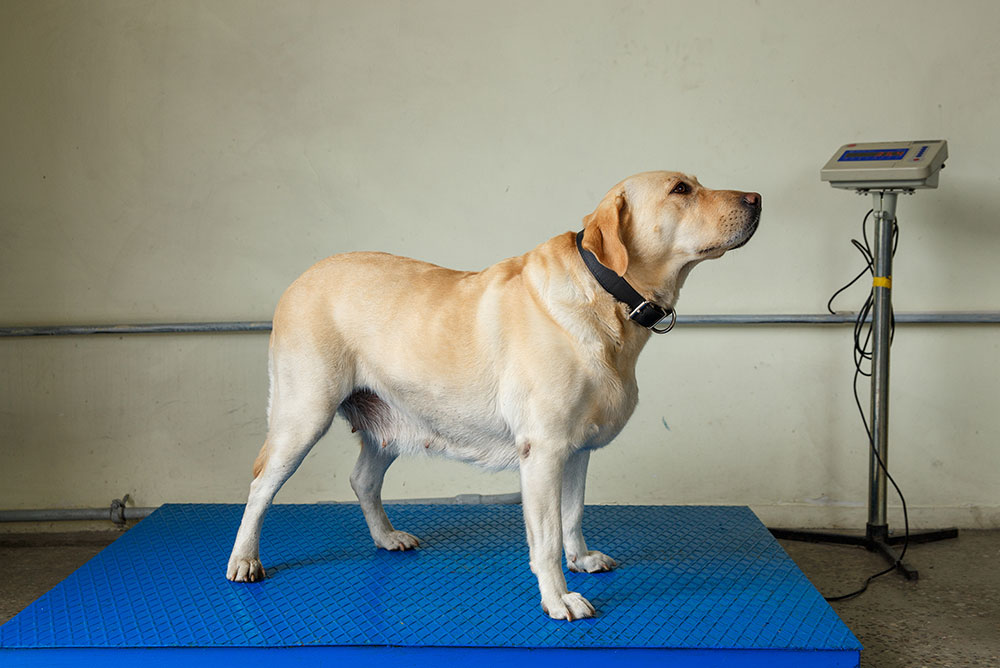
A dog or cat who keeps gaining weight on carefully measured meals is almost always taking in more calories than the body burns, and the extra usually hides in places that feel too small to count. Training rewards, dental chews, a swirl of broth on kibble, and the last bite of a sandwich quietly pile on top of the portion in the bowl. A calorie calculator turns that guesswork into a real daily number you can actually feed against. More than half of dogs and cats in the United States are now overweight or obese, and most of those pounds came from snacks and toppers nobody counted as a meal or a scoop that was overfilled.
Families here bring us pets whose scales are climbing even when the food scoop never changes, and we treat that as a real clinical question rather than a willpower problem. Our team at Memorial Villages Animal Hospital builds wellness and nutrition plans for dogs and cats in Houston that start with an honest calorie target and add in-house bloodwork when the numbers suggest something metabolic is in play, like thyroid disease or early diabetes. We walk through the whole day with you, treats and table scraps and that bite off the dinner plate, and we adjust as your pet’s body condition shifts. If the scale is moving the wrong direction, book a weight consult with our team and we will map out a feeding plan that actually fits your pet.
Calorie Counting in a Nutshell
- A calorie calculator converts your pet’s weight and body condition into a real daily number, so feeding stops being a guess and becomes something you can measure against.
- The added pounds almost always come from uncounted extras: treats, chews, table bites, and toppers that add up quicker than most families realize.
- Body condition scoring tells you more than the scale does, because two pets at the same weight can carry very different amounts of fat and muscle.
- Steady weight gain or sudden loss can signal a medical problem, so a vet check belongs at the start of any feeding change, not the end.
Which Sneaky Extras Are Padding Your Pet’s Day?
Start with the extras, because even a perfectly measured bowl falls apart when they go uncounted. The calories in treats climb faster than most families expect. For a ten-pound dog with a daily budget of roughly 300, one large dental chew can eat up a fifth of that before dinner.
| Common extra | Rough calories | Share of a 300-cal/day small dog |
| Large dental chew | 60-90 | Up to about 30% |
| Two dog biscuits | 40-80 | Around 15-25% |
| Bite of cheese | 50-70 | Around 20% |
| Slice of deli meat | 30-50 | Around 10-15% |
The usual culprits are easy to overlook: training rewards during a long session, table scraps slipped under the chair, dental chews, and the multi-person household where everyone thinks they are the only one handing out snacks. Those calories all count. The good news is that pets respond to the connection and the reward, not the size of the snack, so swapping a rich biscuit for a baby carrot, a green bean, or a bit of plain cooked pumpkin costs almost nothing and no one feels shortchanged. Building those trades into a real plan is something we are glad to help with.
Could a Medical Problem Be Behind the Scale, Not the Snacks?
Before you overhaul the feeding plan, it is worth ruling out a medical reason for a shifting weight or appetite. Thyroid disorders, metabolic disease, chronic pain, dental discomfort, and digestive trouble can all quietly move the scale, and no calorie target fixes a problem that is really about illness. This is where in-house bloodwork and imaging earn their place in the workup.
Excess weight also drives a long list of real problems, and each one is its own reason to take body condition seriously:
- Blood sugar: Carrying extra pounds is one of the biggest drivers of diabetes in dogs and cats, and getting back to a healthy shape is one of the most direct ways to lower that risk.
- Urinary stones: Weight and diet both play into how these form, and once they do, treatment can mean a prescription diet or even surgery.
- Spinal disease and arthritis: Extra pounds add strain that can worsen intervertebral disc trouble and other joint problems.
- High blood pressure: Obesity contributes to systemic hypertension, which quietly stresses the eyes, kidneys, and heart.
- Heat intolerance: In a Houston summer, heat stroke is a bigger danger for a heavy pet that struggles to cool down.
When the numbers point somewhere medical, in-house ultrasound and diagnostic imaging let us look deeper the same day rather than sending you elsewhere.
When Sore Joints and Extra Weight Feed Each Other
Weight and arthritis pain trap a lot of pets in a loop: extra pounds grind on the joints, the soreness that follows makes a pet move less, and less movement puts on more weight while the muscle that supports the joint quietly wastes away. Trying to diet a painful pet into more activity rarely works, because the pain is the thing holding them still. That is why we treat the pain and the pounds together rather than one at a time.
Our rehabilitation services rebuild strength and range of motion with controlled, low-impact exercise a sore pet can actually tolerate, while cold laser therapy eases joint inflammation without adding another daily pill. Get the joints more comfortable and movement comes back, which is what finally lets a calorie plan take hold, and every pound that comes off is a pound no longer loading those joints.
Why Does Calorie Counting Matter?
Calorie counting matters because pet food packs far more energy than it looks like it does, and a small surplus of even 30 or 40 a day quietly becomes a pound or two over a season. A single extra treat a day can add up to real weight across a year without a family ever noticing a change in the routine.
The total number is only part of the story, though. Protein helps hold onto lean muscle, the right amount of fat carries energy and flavor, and fiber slows things down so your pet feels full longer. A bowl that hits the daily target but skimps elsewhere can leave a pet satisfied on the scale and struggling underneath. Calorie totals are only one piece of how much to feed, because age, activity level, and body condition can shift the real answer by a third or more. That is exactly where nutritional counseling earns its keep, translating a formula into a bowl that fits the animal in front of us.
Is Your Pet Actually at a Healthy Weight, or Just an Average One?
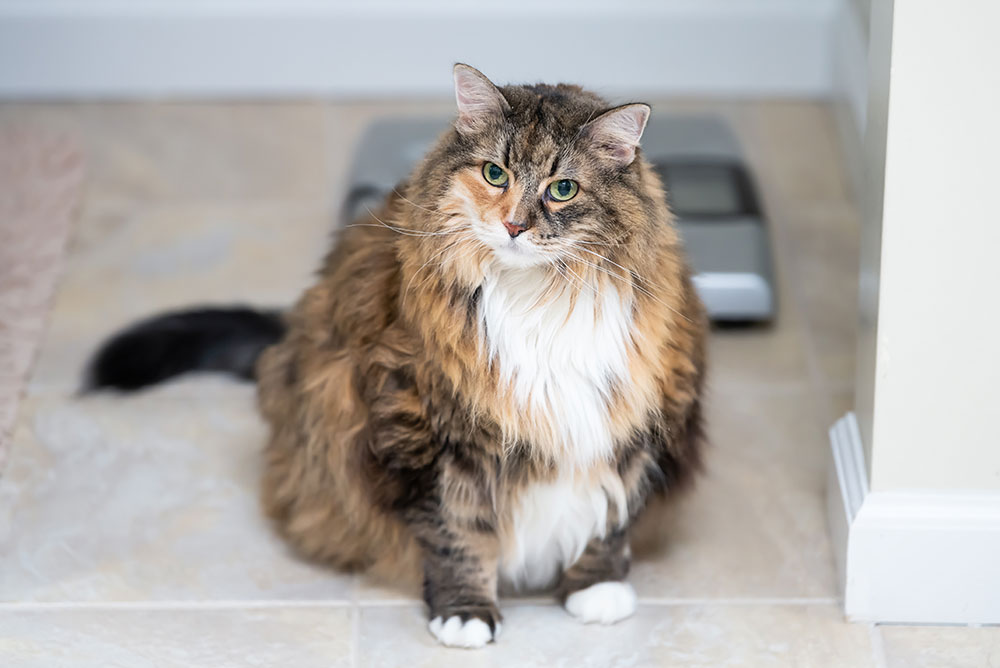
The scale gives you one number, but it cannot tell you what that total is made of. Two ten-pound cats can look completely different, one lean and muscled, the other soft and round, so weight alone rarely settles the question. Body composition is what we are really after.
A pet that holds their weight but quietly loses muscle is not actually thriving, so lean mass belongs in the picture right next to the number on the scale. This is why we rely on a hands-on approach that reads fat and tone rather than pounds. Body condition scoring rates a pet on a 1-to-9 scale by feeling for the ribs, checking for a waist from above, and looking for an abdominal tuck from the side.
You can run a quick version at home once a month, which matters most for fluffy pets whose coats hide the shape underneath:
- From above: Look for a waist that tucks in behind the ribs. A straight or bulging outline points toward too much weight.
- From the side: Watch for the belly to angle up from the ribcage toward the hips. A belly that hangs level or sags is a flag.
- By touch: Run your hands along the ribs. You should feel them easily under a thin layer, like the back of your hand. Hard to find means extra padding; sharp and prominent means too little.
| BCS range (1-9) | What it means | What you feel |
| 1-3 | Underweight | Ribs, spine, hips very easy to see and feel; little fat |
| 4-5 | Ideal | Ribs easy to feel; visible waist and belly tuck |
| 6-7 | Overweight | Ribs hard to feel; waist fading; slight fat pad |
| 8-9 | Obese | Ribs buried; no waist; heavy fat over back and base of tail |
Not sure what you are feeling? Our team is happy to walk you through hands-on body condition assessment at a visit so you can score at home with confidence.
How Do I Turn a Calculator Number Into Scoops That Fit My Pet?
An online calorie calculator is a strong starting point, not a final verdict. It runs a formula off your pet’s weight and gives a daily estimate, but it cannot know your dog runs the fence line for an hour or that your cat has slowed since turning twelve. Treat the number as a first draft.
Under the hood, a good calorie calculator estimates resting energy needs from your pet’s weight, then applies a multiplier for life stage, activity, and spay or neuter status. Before you plug anything in, gather three things:
- Current weight: Ideally from a recent vet visit, since bathroom scales struggle with wiggly pets.
- Body condition score: Your best honest read from the checks above.
- Calories per cup: Printed on the bag as kcal/cup, so you can turn a daily target into actual scoops.
From there, decide whether to fold treats into the daily total or budget them separately, then recheck every two to three weeks based on how your pet looks and moves. Small daily overages are the usual path to pet obesity, not a rare accident, which is exactly why review-and-adjust beats set-and-forget. Needs shift with the seasons, a growth spurt, a slower senior stride, or a new diagnosis.
Cats deserve extra caution here. Safe weight loss for cats has to be slow and steady, since a cat that sheds pounds too quickly can head straight into serious trouble. One that stops eating or drops weight too fast can develop hepatic lipidosis, a life-threatening liver condition, which is exactly why crash diets are dangerous for cats. When you are ready to turn a calculator number into real scoops and a schedule, book a weight consultation and we will fine-tune the target together.
A One-Container Trick That Keeps Treats From Piling Up
The simplest trick that actually sticks is the morning-portion method: measure your pet’s entire daily food into one container first thing, then pull treats from that same stash all day instead of adding extras on top. Whatever is left at the end goes into the dinner bowl.
It works because it puts a hard ceiling on the day that everyone in the house can see. Nobody has to track a running tally in their head, and the kids handing out kibble are drawing from the same allowance as the meals. No overage, no guesswork, no debating whether the dog already got fed twice. For families juggling different feeders and shifting schedules, that visible limit is often the whole ballgame. If you want a version tailored to your household, come see us and we will build one around your routine.
Keeping the Plan Working as Your Pet Changes
A feeding plan that lasts is one that changes as your pet does, right down to how active they are week to week. Regular weigh-ins catch small drifts early, and most adult pets do well with a yearly check while older pets benefit from a visit every six months.
Staying ahead of those changes is a big part of what routine wellness care is for.
What Makes a Prescription Weight-Loss Diet Different?
Not every diet food on the shelf is built the same. Prescription weight-loss diets go through feeding trials to prove they take off fat while protecting lean muscle, and they are formulated with specific protein-to-calorie ratios plus added nutrients that support fat metabolism. Controlled fiber is part of why these diets work, helping a pet feel full and satisfied on a smaller ration rather than begging between meals. When a therapeutic food is the right call, we can point you to the appropriate weight management diet and get the amounts dialed in.
How Do Puzzle Feeders and Enrichment Help?
Enrichment turns a diet into a game, which makes fewer calories feel like more. Puzzle feeders, slow bowls, and scattered kibble stretch a dog’s meal into minutes of sniffing and problem-solving, which cuts begging and boredom. Cats do best with foraging toys, several small meals a day, and chances to chase and pounce that echo their hunting instincts. Pairing a gradual calorie trim with more movement and mental work is what makes weight loss actually stick. Want ideas that fit your pet? Come talk through your pet’s feeding goals with us.
Common Questions Families Ask Us About Feeding and Weight
How fast should my pet lose weight?
Slow and steady wins here. A safe pace is roughly one to two percent of body weight per week for dogs, and even gentler for cats, since rapid loss in cats can trigger dangerous liver problems. That may feel frustratingly slow, but it protects muscle and keeps the pounds off for good. We set a target loss and recheck along the way, adjusting the plan if the scale stalls or drops too quickly.
My pet acts starving all the time. Am I underfeeding?
Constant begging is usually not a sign of underfeeding. Many pets learn that acting hungry gets a response, and a food-motivated dog would happily eat a second dinner regardless of need. If the body condition score looks good and the weight is holding steady, your pet is likely getting enough. Higher-fiber foods, puzzle feeders, and veggie treats can all take the edge off the begging without adding meaningful calories.
Do indoor cats really need fewer calories?
Indoor cats really do need fewer calories in most cases. A cat that naps most of the day burns far less than an outdoor hunter, and spaying or neutering trims the need further. That combination makes portion creep easy, which is why so many indoor cats end up heavy. Measuring meals, working in play sessions, and rechecking body condition monthly go a long way toward keeping a housebound cat trim.
More Good Years Start at the Food Bowl
A pet at a healthy weight moves easier, faces fewer medical problems, and tends to share more good years with the family. Saying no to a begging dog or a countertop cat is genuinely hard, we know, but small changes stack up into real results.
You do not have to sort this out alone. We are glad to help you set realistic goals, choose the right food, and shape a plan that fits your household, so reach out with your questions any time.





Leave A Comment