

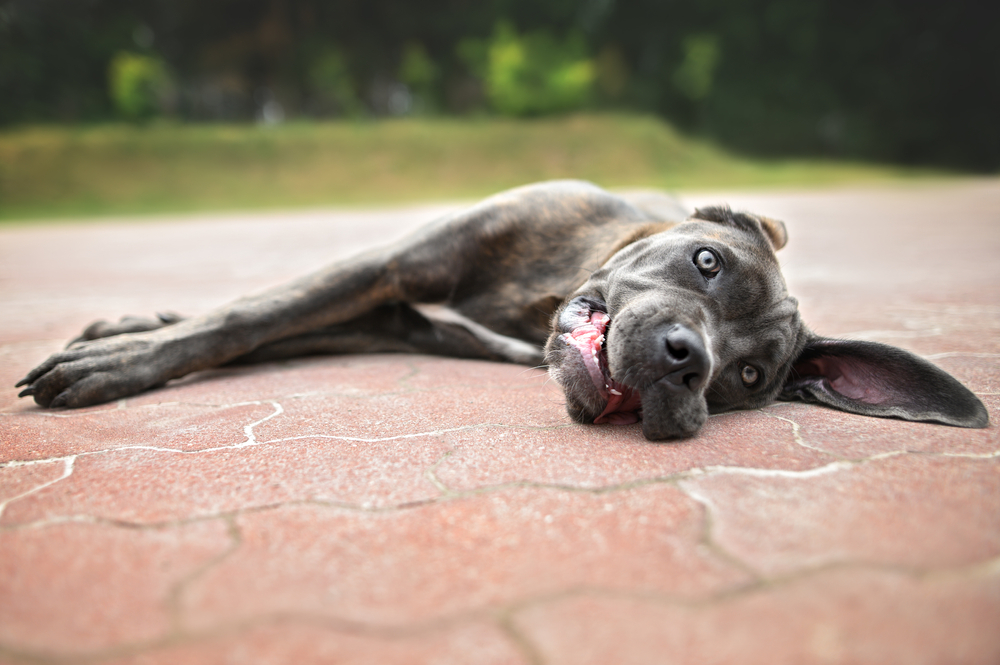
If your pet just overheated, act now: get them out of the heat, start cooling with cool (not iced) water on the neck, belly, groin, and paw pads, add strong airflow, and head to a veterinarian while you keep cooling. Houston’s combination of high heat and heavy humidity overwhelms a pet’s cooling system fast, and the damage builds by the minute, straining the kidneys, blood pressure, and the blood’s ability to clot. A pet who seems to recover after cooling can still be developing internal injury, so home cooling buys time on the way in, it does not replace the visit.
Memorial Villages Animal Hospital cares for pets through one of the hottest, most humid summers in the country, where heat stroke is a season-long threat rather than a rare bad day. Our emergency and urgent care is built to move fast when a pet overheats. If your dog or cat has been in the heat and you are worried, contact us right away and we will tell you what to do next.
Houston Heat: The Essentials
- In Houston’s heat and humidity, a pet can overheat quickly, so a fast response matters as much as what you do.
- Cool (never iced) water plus strong airflow is the safe way to cool; ice traps heat in the core.
- The pavement is its own hazard here, hot enough to burn paws long before and after the peak of the day.
- A pet who bounces back after cooling can still develop kidney, liver, or clotting trouble over the next 24 to 72 hours.
What Should You Do if Your Pet Just Overheated?
When you think your pet has overheated, the first minutes set the tone, so move quickly through these steps for cooling:
- Get out of the heat and into air conditioning if you can, since AC pulls humidity out of the air too.
- Wet the thin-skinned areas, the neck, belly, groin, and paws, with cool tap water rather than ice.
- Run a strong fan on the damp spots, because moving air is what drives cooling.
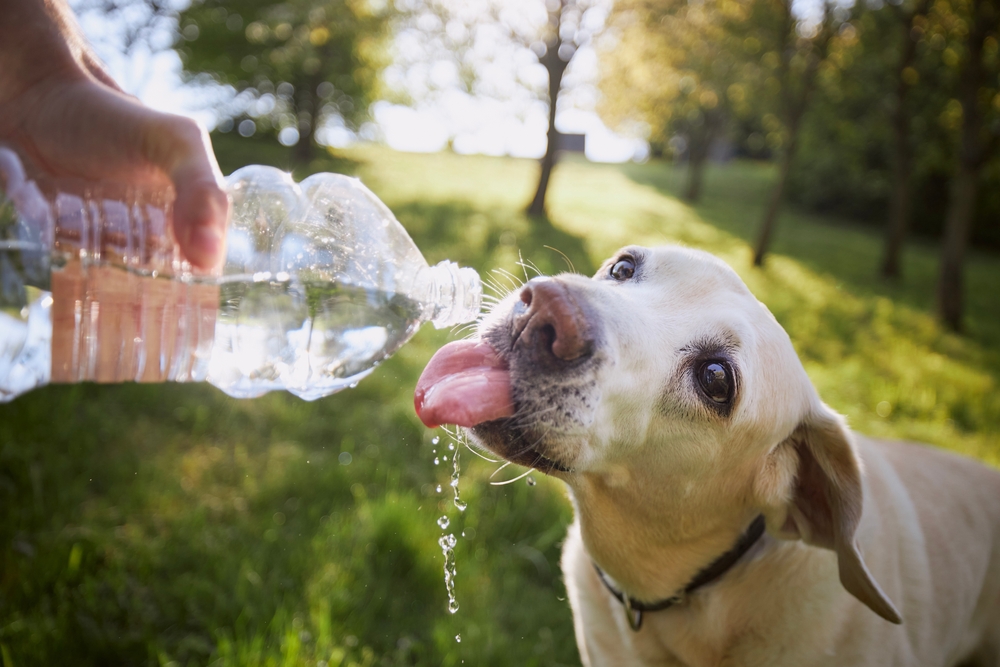
- Let an alert pet sip cool water, and never force it on a groggy one.
- Keep ice away, since ice baths constrict surface vessels and trap heat.
- Call us and drive in with the AC on, easing off cooling near 103 degrees if you’re able to check their temperature.
Even if your pet rallies in the car, come in, because what is happening inside rarely matches how they look.
Why Do Dogs and Cats Overheat So Fast Here?
Dogs and cats cannot sweat the way people do, so they rely on panting, which sheds heat by evaporating moisture from the mouth and airway. Houston works against that on two fronts: the temperature is high for months, and the humidity is heavy, which means the air can barely absorb the moisture a panting dog is trying to release. The cooling system that works fine in a dry climate simply cannot keep up here.
Some pets have even less margin. Flat-faced breeds, whose airway anatomy limits panting and whose risk rises with extra weight, along with heavy-coated dogs, puppies, seniors, and pets with heart or airway disease, reach their limit sooner than a healthy adult. In a Houston summer, those pets need the most caution of all.
How Hot Is Too Hot, and What About the Pavement?
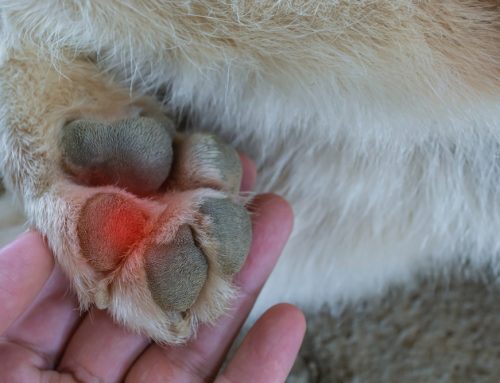
For most dogs in Houston’s humidity, anything above the mid-80s calls for very short, well-timed activity, and the upper 90s mean keeping things indoors. The pavement deserves its own warning, because asphalt absorbs and holds heat far beyond the air temperature, and it stays dangerous well into the evening.
| Air temperature | Asphalt can reach | What it means for paws |
| 77°F | About 125°F | Already risky for sensitive paws |
| 87°F | About 135°F | Can burn in under a minute |
| 95°F and up | 140°F or more | Unsafe; stick to grass and shade |
The quick field check is the seven-second test: press the back of your hand to the pavement, and if you cannot hold it there comfortably, it is too hot for your dog’s paws. In Houston that often rules out midday and afternoon walks for months at a stretch.
What Are the Signs of Heat Stroke?
The first signs are easy to brush off in a city where everyone is hot, which is exactly why they matter. Early on, heat stroke in pets shows up as heavy panting that will not settle, a dog seeking cool floors, and a general slowing down.
As it builds, the drool turns thick, the gums redden, and the dog grows weak, restless, or unsteady, sometimes vomiting. At the severe end, gums go pale, gray, or purple, and a dog may collapse, become disoriented, or seize, which is a flat-out emergency. Cats show it more quietly, so a cat panting with an open mouth, lying flat, or hiding somewhere cool needs help immediately, because open-mouth breathing in a cat is never normal.
If you’re worried your pet might be experiencing heat stroke, don’t wait. We offer emergency veterinary care in Houston during our open hours, but please call first so we can give you guidance. After hours, go directly to the nearest emergency vet.
Why See the Vet Even After Your Pet Cools Down?
A pet who cools down still needs the vet, because the most serious effects of heat stroke develop internally over the following days. Heat stroke treatment layers controlled cooling, IV fluids to support circulation and the organs, and watchful management of complications, with the first 24 hours the riskiest.
The delayed complications are why we would rather take a look: the kidneys can decline over two or three days, the liver can show strain on bloodwork, the gut lining can break down into bloody vomiting or diarrhea, the clotting system can spiral into DIC where the body clots and bleeds at once, and the brain can swell, with neurologic signs surfacing after an apparent recovery. Our in-house bloodwork and digital imaging let us see what is developing below the surface and treat it early.
Which Pets Are at Higher Risk in Houston’s Heat?
Some pets reach their cooling limit much sooner than others, and recognizing which group your pet falls into changes how cautious you need to be.
Flat-faced (brachycephalic) breeds are the highest-risk group by a wide margin. Bulldogs, French Bulldogs, Pugs, Boston Terriers, Boxers, Shih Tzus, and Persian or Himalayan cats all have compressed upper airways that make panting far less efficient than in a long-nosed dog. The narrowed nostrils, elongated soft palate, and shortened airway all increase the work of breathing and reduce how much heat the pet can shed with each pant. A brachycephalic dog who looks like he’s panting hard may actually be moving very little air, and the difference between mild overheating and a true emergency in these breeds can be a matter of minutes. We treat heat stroke in brachycephalic dogs as a near-immediate emergency regardless of how the dog looks at presentation.
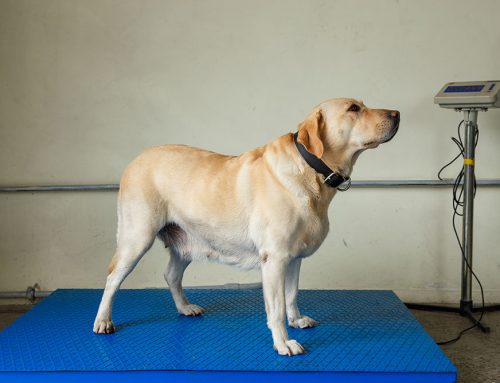
Overweight pets carry an extra layer of insulation they can’t take off, and the fat tissue itself generates metabolic heat. Excess weight also crowds the chest cavity, reducing how deeply a pet can breathe and how effectively they can pant. In a brachycephalic dog, even a few extra pounds compounds the airway limitation considerably. Weight management isn’t usually framed as heat safety, but in Houston it is.
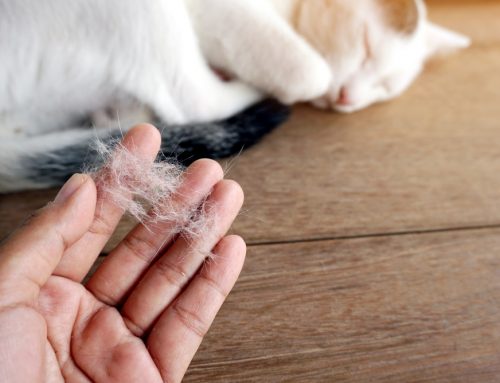
Thick or double-coated dogs like Huskies, Malamutes, Bernese Mountain Dogs, Great Pyrenees, Newfoundlands, and the Northern breeds in general were built for entirely different climates. Their dense undercoat insulates against cold beautifully and against heat poorly. The instinct to shave a heavy coat in summer is understandable but usually wrong: the coat actually provides some insulation against direct sun and helps regulate temperature when it’s properly groomed. Regular brushing to remove loose undercoat helps more than shaving does, and these dogs need particularly strict limits on outdoor time during Houston summers regardless of coat care.
Pets with heart or respiratory disease have less reserve to spare when their cooling system is stressed. A dog with chronic bronchitis, laryngeal paralysis, collapsing trachea, or significant heart disease can decompensate on a day a healthy dog would handle without issue. If your pet has any of these conditions, we’ll talk through specific heat-season precautions at their wellness visits.
Puppies and senior pets sit at the vulnerable ends of the age range. Young puppies haven’t fully developed temperature regulation; senior pets have lost some of it, often alongside the heart, kidney, or respiratory changes that come with age. Both groups need shorter outings, more frequent breaks, and a lower threshold for keeping things indoors entirely.
We’ll go over your individual pet’s risk factors during their wellness visits, and talk about how to prevent heat stroke if you have an at-risk pet.
How Do You Protect a Pet All Houston Summer?
Because the heat lasts for months, prevention here is a daily discipline rather than a single hot-day checklist. A few heat safety habits make summer manageable: keep walks to the early morning and after dark, keep water in several spots, give pets cool tile or a mat with the AC running through the worst hours, and run the seven-second pavement test every single time before you head out. Preventing heat stroke also means cutting any outing short the moment your dog lags or pants hard. And never leave a pet in a parked car, because a Houston car interior becomes lethal in minutes, and hot vehicles kill pets every summer even with the windows cracked.
The rest of the household needs the same year-long thinking. For outdoor cat safety, offer shaded water refreshed twice daily and cool retreats, and treat open-mouth breathing in a cat as an emergency. Indoors, keep the AC and fans going and beat the cooped-up energy with boredom busters and DIY enrichment toys that occupy a pet without raising their temperature.
Frequently Asked Questions About Pet Heat Stroke
What Temperature Is Too Hot to Walk My Dog in Houston?
With the humidity factored in, most dogs should stick to short walks once it climbs past the mid-80s, and the upper 90s mean keeping activity indoors. Flat-faced, senior, and overweight pets should hold to an even lower ceiling. Because Houston pavement holds heat long after the air cools, the seven-second pavement test is often a better guide than the temperature reading.
My Pet Was Hot but Seems Fine Now. Do I Still Need to Come In?
If your pet was genuinely overheated, a check is the safe move even when they look recovered. Heat stroke’s organ and clotting damage can take a day or two to surface, and a normal-seeming pet may still be affected. A same-day exam and bloodwork answer the question and catch any problem while it is most treatable.
Can Heat Stroke Cause Permanent Damage?
It can, which is why speed matters so much. Severe or prolonged heat stroke can leave lasting kidney, liver, or neurologic damage, while a pet cooled quickly and treated early often recovers fully. The outcome usually comes down to how fast the temperature was brought down and care began.
Is Houston Pavement Really That Dangerous?
It genuinely is, and it is one of the most underestimated hazards here. Asphalt can run 40 to 50 degrees hotter than the air and stays scorching well after sunset, so a dog can suffer painful paw burns on what feels like a mild evening. Walking on grass, going out at the coolest hours, and running the pavement test protect those paws.
Are Early-Morning Walks Cool Enough in a Houston Summer?
Early morning is the best window, but in deep summer it is not automatically safe, because Houston often stays warm and humid overnight and the pavement can still be hot from the day before. Aim for the coolest part of the morning, keep the walk short, carry water, and still run the pavement test before you go. On the most brutal stretches, even sunrise can be too warm for flat-faced or senior dogs, who often do better with indoor activity.
A Houston-Smart Summer for Your Pet
In a city this hot for this long, staying safe means treating heat as a daily fact of life: early walks, constant water, the pavement test every time, and midday spent indoors. Cool the right way if your pet overheats, and come in even when they seem to recover.
If your pet has overheated or you want a summer plan that fits them, book online or reach out about emergency and urgent care, and our team will help.




Leave A Comment