


Veterinary chiropractic and acupuncture conversations tend to land one of two ways with people: immediate enthusiasm from someone who uses these therapies themselves, or healthy skepticism from someone who wants to understand the mechanism before committing. Both reactions are reasonable. What the evidence and clinical experience show is that for certain conditions, including musculoskeletal pain, post-surgical recovery, neurological dysfunction, and some chronic disease management, these modalities produce measurable improvements in comfort and function that conventional medicine alone doesn’t always achieve.
Memorial Villages Animal Hospital in Houston offers a genuinely integrative approach to care, with chiropractic and acupuncture therapies built into our clinical model alongside conventional medicine. Whether your pet is recovering from surgery or managing a chronic condition, book online to talk through what a combined care plan could look like.
How Do You Recognize Pain and Mobility Problems in Pets?
The first step in any integrative care conversation is recognizing that pain or mobility limitation is actually present. Pets, particularly cats, are skilled at hiding discomfort, and many of the early signs get attributed to “slowing down with age” rather than treatable conditions.
Behavioral signs that may indicate pain:
- Reluctance to jump up onto furniture, into the car, or down from beds
- Slowing on walks or refusing to go as far as before
- Difficulty rising from a lying or sitting position
- Stiffness that improves once your pet warms up
- Changes in posture including hunched back, dropped tail, or shifted weight
- Avoiding stairs or taking them one at a time
- Increased irritability or reluctance to be touched in specific areas
- Decreased grooming in cats (or, conversely, focused overgrooming of a painful area)
- Hiding more than usual or seeking out unusual resting spots
- Vocalization that’s new or unexplained
For dogs, chronic pain assessment tools like the Canine Brief Pain Inventory help you and your veterinarian track changes over time. For cats, the Feline Grimace Scale assesses pain through specific facial expressions and is useful both during clinic visits and at home. A structured evaluation of how your pet moves, transitions between positions, and tolerates handling provides a baseline for measuring progress.
If you’ve noticed changes in how your pet moves or behaves, an evaluation through our emergency and urgent care or scheduled appointment is the right starting point. Some pain that looks chronic actually resolves with proper diagnosis and treatment, and some “normal aging” turns out to be entirely treatable.
What Is Veterinary Chiropractic Care and How Does It Work?
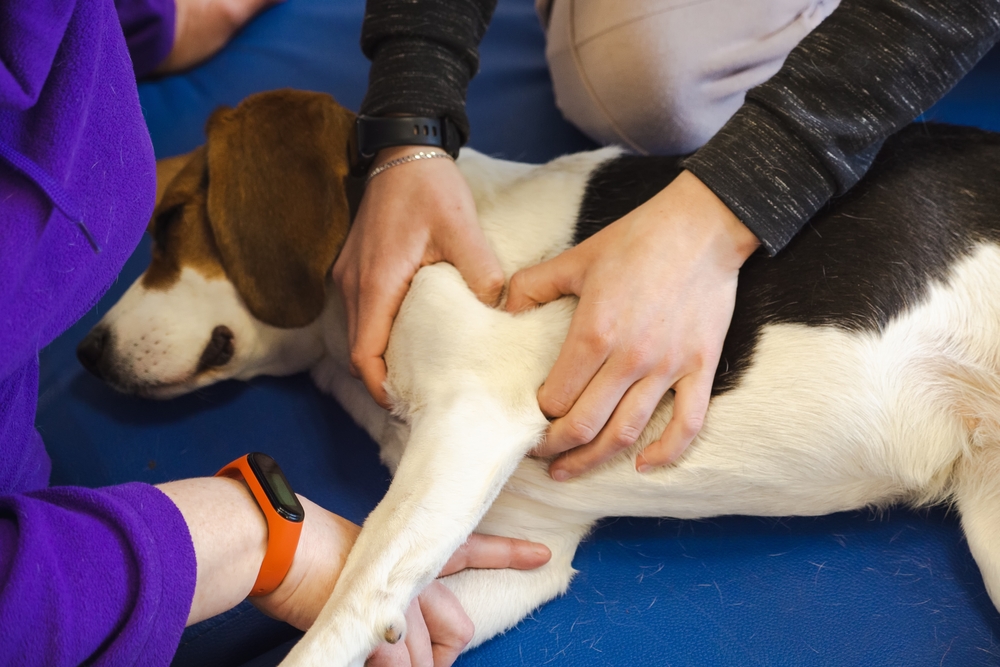
Veterinary chiropractic addresses restricted joint movement in the spine and limbs through specific, controlled adjustments. It’s not the same as massage (which addresses soft tissue) or general physical therapy (which involves a broader range of exercises and modalities). Chiropractic care for companion animals has gained substantial credibility in veterinary medicine over the past two decades, supported by both clinical experience and an expanding evidence base.
The mechanism: when a vertebral joint becomes restricted in its movement (called a subluxation in chiropractic terminology, though the term means something slightly different in conventional medicine), it can affect:
- Local muscle tension and spasm
- Pain signaling along nerve pathways exiting that vertebral level
- Compensatory movement patterns that strain other joints
- Range of motion through that body region
A controlled adjustment restores normal movement to that specific joint, allowing surrounding muscles to relax, reducing nerve irritation, and enabling more normal movement patterns. Chiropractic treatment for pets is performed only by veterinarians or certified animal chiropractors with specialized training; it’s not the same as human chiropractic care transferred to animals.
Sessions typically last 20 to 30 minutes. Most pets accept the handling well, and many become noticeably relaxed during treatment. The number of sessions needed varies by condition: acute issues may resolve in a few visits, while chronic conditions often benefit from ongoing maintenance.
Conditions That Respond Well to Chiropractic Care
Chiropractic care addresses a range of conditions:
- Back and neck pain from various causes
- Intervertebral disc disease in conjunction with conventional treatment
- Gait abnormalities including subtle lameness without obvious orthopedic cause
- Post-surgical recovery to address compensatory patterns
- Performance issues in athletic, working, or sport dogs
- Arthritis management as part of a broader plan
- Hip dysplasia support
- Sacroiliac joint dysfunction
- Compensatory pain from any chronic injury
Cats can absolutely benefit from chiropractic care, though the approach is gentler and the techniques modified for feline anatomy. Older cats with arthritis often respond well, particularly when chiropractic is combined with other modalities.
Chiropractic isn’t appropriate for every condition or every pet. Active fractures, certain spinal cord conditions, and some cancers are situations where adjustments aren’t recommended. A thorough evaluation determines whether chiropractic is the right tool for an individual case. It’s especially valuable when paired with rehabilitation and physical therapy, which we offer in our new rehab facility.
What Is Veterinary Acupuncture and How Does It Work?
Veterinary acupuncture involves placing very thin needles at specific anatomical points to stimulate physiological responses. The practice originated in traditional Chinese medicine over 2,000 years ago, but the modern understanding of how it works has been increasingly characterized through Western scientific research.
The primary mechanisms involve:
- Stimulation of nerve endings that activate descending pain inhibition pathways
- Release of endogenous opioids and other neurotransmitters that reduce pain signaling
- Local increase in blood flow to treated areas
- Modulation of inflammatory responses
- Effects on autonomic nervous system function
A typical session involves placing 5 to 20 thin needles at selected points based on the condition being treated. Needles are very fine (much smaller than vaccine needles), and most pets feel minimal sensation when they’re inserted. Your pet rests with the needles in place for 15 to 30 minutes, often becoming visibly relaxed during the session.
Some practitioners also use electroacupuncture (gentle electrical stimulation through the needles) or aquapuncture (injection of vitamin B12 or other substances at acupuncture points) for specific situations. We offer both options if it’s a good option for the patient.
The level of training required for veterinary acupuncture is substantial. Certified veterinary acupuncturists (CVAs) complete extensive coursework on top of veterinary training. Our team includes practitioners with formal certification.
Conditions That Respond Well to Acupuncture
Acupuncture addresses a remarkably wide range of conditions:
- Chronic pain including arthritis, post-surgical pain, and pain from cancer
- Acute musculoskeletal pain including back injuries and soft tissue strains
- Nerve damage including post-disc disease neuropathy
- Neurological conditions including some cases of seizures, weakness, and paralysis
- Gastrointestinal issues including chronic vomiting, diarrhea, and inflammatory bowel disease
- Urinary tract problems including chronic cystitis in cats
- Dermatologic conditions including some allergic and itchy skin diseases
- Respiratory conditions including chronic bronchitis and asthma
- General age-related decline and quality of life support
Acupuncture is particularly useful for pets who can’t tolerate certain medications. Cats with kidney disease who can’t take NSAIDs, dogs with liver problems who need careful drug selection, and seniors with multiple medications interacting often benefit from acupuncture as a non-pharmaceutical pain management option.
How Chiropractic Care and Acupuncture Complement Each Other
Chiropractic and acupuncture work on overlapping but distinct aspects of pain and mobility:
- Chiropractic addresses joint mechanics, structural alignment, and the muscular and neurological consequences of restricted movement
- Acupuncture targets nerve signaling, systemic pain response, inflammatory cascades, and autonomic regulation
Combining them produces benefits beyond what either alone can deliver. For dogs recovering from a back injury, chiropractic restores normal vertebral movement while acupuncture reduces the lingering nerve sensitivity that often persists after physical structures heal. For a senior cat with arthritis, chiropractic addresses joint restrictions while acupuncture provides systemic pain relief that doesn’t require medication.
Both work even better as part of a multimodal plan that may also include:
- Conventional pain medications when needed
- Joint supplements
- Cold laser therapy for tissue healing and inflammation
- PEMF (pulsed electromagnetic field) therapy
- Shockwave therapy for certain musculoskeletal conditions
- Regenerative medicine including PRP for joint and soft tissue conditions
This integrative approach is core to how we practice. The pets who benefit most are those whose care is personalized to their specific situation rather than fitted into a one-size-fits-all framework.
How These Therapies Fit Into a Broader Rehabilitation Plan
Chiropractic and acupuncture in the clinic produce best results when supported by structured home care. Veterinary physical rehabilitation approaches use targeted exercises, controlled activity, and home modifications to extend the gains from in-clinic treatments.
Practical home support strategies:
- Structured daily exercise at appropriate levels for the condition
- Warm-ups and cool-downs before and after activity
- Joint-supportive surfaces including non-slip rugs and orthopedic beds
- Weight management as one of the most impactful interventions for any musculoskeletal condition
- Activity modification to avoid movements that aggravate the condition
Our rehabilitation services at Renew Pet Rehab include underwater treadmill therapy, structured exercise programs, and the full range of modalities that complement chiropractic and acupuncture. We accept referrals from other veterinarians for pets needing comprehensive rehabilitation support.
What to Expect During and After Treatment
The typical sequence:
First consultation: A thorough evaluation including history, physical exam, gait assessment, and palpation. We discuss the pet’s specific issues, set realistic goals, and develop an initial treatment plan.
Initial treatments: Most plans start with sessions ranging from twice weekly to every 2 weeks while your pet’s response is established. Many people notice improvements after the first few sessions, though some conditions take longer to show measurable changes.
Adjustment of frequency: Based on response, sessions are spaced further apart as your pet improves. Maintenance treatment is often monthly or every 6 to 8 weeks for chronic conditions.
Realistic timelines: Acute injuries often improve substantially within 4 to 6 sessions. Chronic conditions usually require longer treatment courses, with the goal of long-term management rather than complete resolution. Some pets do best with ongoing maintenance to prevent recurrence.
What changes might you notice early?
- Improved willingness to move
- Better sleep quality
- Less stiffness in the morning or after rest
- Improved appetite in pets whose appetite was suppressed by chronic pain
- Better mood and engagement
- More willingness to be touched in previously sensitive areas
For accurate documentation of progress, digital imaging provides baseline structural information that helps us track changes over time.
Frequently Asked Questions About Chiropractic and Acupuncture for Pets
Are these therapies safe for my pet?
Both are very safe when performed by trained, certified practitioners. Adverse effects are rare. Some pets feel mildly sore for a day after treatment (similar to post-workout soreness), but this resolves quickly.
Will my pet tolerate the treatment?
Most pets do remarkably well. Acupuncture needles are extremely fine, and chiropractic adjustments are quick and gentle. Many pets become visibly relaxed during sessions and seem to enjoy them. We work at the pet’s pace and adjust handling for anxious patients.
How quickly will I see results?
Variable by condition and individual. Some pets show noticeable improvement after the first session; others need several visits before changes become clear. Acute conditions often respond faster than chronic ones.
Are these treatments covered by pet insurance?
Coverage varies by policy. Many pet insurance plans now cover veterinary acupuncture and chiropractic when performed by licensed practitioners. Check your specific policy or ask us to provide documentation for claims.
Can I use these therapies instead of conventional medicine?
For some conditions, integrative therapies are appropriate as primary treatment. For others, they work best alongside conventional medicine. We provide an honest assessment of what’s most likely to help your specific pet, including when conventional treatment is the better starting point.
Next Steps for Exploring Integrative Care
Pain and reduced mobility don’t have to be accepted as permanent. Chiropractic and acupuncture offer real, evidence-informed options for relief, and combining them with our broader range of services often produces meaningful improvements when conventional approaches alone haven’t been enough.
The best path forward is an individualized one developed in partnership with a veterinary team that understands the full picture of your pet’s health. If you’d like to explore whether chiropractic, acupuncture, or a combined approach might help your pet, contact us to start the conversation. We’ll evaluate your specific situation, set realistic expectations, and build a plan that fits your pet’s needs and your goals.