

Cranial Cruciate Injuries in Dogs: Diagnosis, Surgery, and Rehab
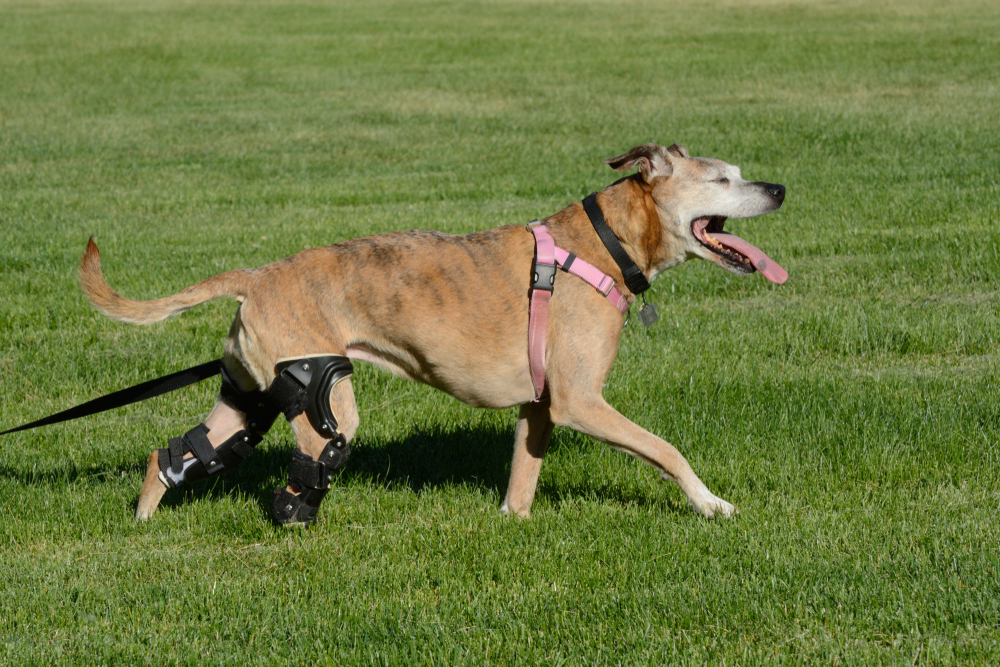
Houston dogs love to run, and sometimes that enthusiasm catches up with them. A sudden yelp at the dog park, a hind leg held up after a hard turn in the backyard, or a limp that keeps getting worse over weeks can all point to a cranial cruciate ligament (CCL) tear. The CCL is the ligament that holds the knee joint stable during movement, and when it ruptures, the knee shifts with every step, causing pain and setting the stage for cartilage damage and arthritis that progresses if left unaddressed.
At Memorial Villages Animal Hospital, we manage CCL injuries from the first sign of a limp all the way through getting your dog back on their feet after surgery. We work closely with the board-certified surgeons at H-Town Veterinary Specialists– located right next door- to get your dog into surgery quickly when it is needed. After surgery, Renew Pet Rehab, our on-site rehabilitation center, provides the hands-on recovery support that turns a successful repair into a dog who is actually running again. Reach out to us or book an appointment online if your dog has been limping or showing signs of knee pain. We are here to help with every step.
What Is a CCL Injury and How Does It Happen?
The Anatomy and the Risk Factors
The cranial cruciate ligament runs diagonally inside the knee joint and is the primary structure preventing the tibia from sliding forward relative to the femur during movement. When it tears, that sliding happens with every step, grinding cartilage surfaces that were not designed for that kind of contact.
Canine cruciate ligament injury rarely follows the same pattern as a human sports ACL tear. In people, a CCL tear is often a single traumatic event. In dogs, it is typically the end point of gradual ligament deterioration, with a final movement completing what was already well underway. Partial tears, which almost always progress to full tears over time, are common and often go unrecognized until the limp becomes impossible to ignore. Houston’s dog-friendly parks, trails, and backyards see a lot of the kind of high-intensity activity that puts knees under real load.
Common contributing factors:
- Sharp pivoting, twisting, or directional changes at speed during fetch or play
- Episodic high-intensity activity in otherwise less active dogs
- Excess body weight increasing joint load with every stride
- Breed predisposition: Labrador Retrievers, Rottweilers, Boxers, and Golden Retrievers carry higher inherent risk
- A prior partial tear that progressed over time without being identified
Staying current on wellness exams gives our team the opportunity to assess your dog’s body condition and joint health regularly, which is the best early-warning system for building problems.
Signs That Something Is Wrong With Your Dog’s Knee
What CCL Injuries Look Like Day to Day
The presentation varies considerably from dog to dog. Some CCL tears produce sudden, dramatic non-weight-bearing. Others develop into a chronic pattern of limping that waxes and wanes over weeks or months, temporarily improving with rest before returning as soon as activity resumes.
Signs that point toward a CCL injury:
- Hind-limb lameness that is clearly worse after activity and better with rest, but never fully resolves
- Visible swelling or thickening along the inner aspect of the knee
- Sitting with the affected leg held out to the side rather than folded naturally underneath
- Reluctance or hesitation before jumping, going up stairs, or rising from rest
- A toe-touching gait where the foot barely contacts the ground
- Loss of muscle mass in the affected hind leg compared to the other
A sprain or minor soft tissue strain generally improves meaningfully within a week of rest. A CCL injury does not. If your dog’s limp is still present after a week of reduced activity, evaluation is the appropriate next step. We offer emergency and urgent care during our regular hours so your pet can be seen promptly.
How We Diagnose CCL Injuries at Memorial Villages
Physical Examination and Imaging
Orthopedic examination is the foundation of diagnosis. The “drawer sign” and “tibial thrust” test assess how much the tibia slides relative to the femur under applied pressure, directly evaluating ligament integrity. Many dogs require light sedation to allow a complete and accurate exam.
X-ray diagnostic imaging identifies secondary joint changes: fluid accumulation, early arthritic remodeling, and bone spur formation that indicate how long the instability has been present. It also rules out fractures and other bony contributors to the clinical picture.
What Happens Without Treatment?
Rest alone does not repair a CCL tear. The ligament does not regenerate in a way that restores mechanical stability, and the instability continues causing damage throughout any rest period.
The ongoing consequences of untreated CCL tears include:
- Progressive arthritis that begins immediately and accelerates with each passing week
- High risk of meniscal tear from the abnormal joint loading
- Significant muscle atrophy in the affected limb
- Increasing stress on the opposite hind leg, which causes a second CCL tear in a substantial percentage of dogs within two years of the first injury
The sooner a confirmed CCL tear is addressed surgically, the less cumulative arthritis has developed, and the better the long-term functional outcome. Delaying costs the joint time it cannot get back. Reach out to our team rather than taking a wait-and-see approach.
Surgery: What H-Town Veterinary Specialists Offer
When surgery is indicated, we refer directly to H-Town Veterinary Specialists, located right next door to our practice. Their board-certified surgeons perform over 500 CCL surgeries per year at their dedicated orthopedic center, handling even the most complex cases. Because of our proximity and close working relationship, your dog can often be seen quickly, frequently same-day, rather than waiting the three to six weeks typical at larger multispecialty hospitals.
MI-TPLO with Arthroscopy: The Gold Standard
H-Town’s preferred approach for CCL repair is Minimally-Invasive TPLO (MI-TPLO) with arthroscopy, a technique their team has pioneered and refined. TPLO surgery changes the geometry of the knee so that normal walking forces no longer require an intact CCL to maintain stability- the tibial plateau is cut, repositioned, and secured with a bone plate, eliminating the need for the damaged ligament entirely.
What makes H-Town’s approach distinctive is the arthroscopic component. Rather than a traditional open incision, a small camera is used to inspect the joint and guide surgical planning before the repair begins. This allows direct visualization of all ligament damage with minimal tissue disruption, a smaller incision, reduced post-operative swelling, and a faster return to mobility compared to conventional open techniques.
Other Surgical and Non-Surgical Options
For dogs where MI-TPLO is not the right fit, additional approaches are available:
- Lateral suture (extracapsular repair): A synthetic suture placed outside the joint stabilizes the knee while scar tissue develops. Best suited to small or less active dogs; long-term durability in larger patients is generally lower.
- Conservative management: For dogs with partial tears or very limited activity levels, rest, weight management, physical therapy, and anti-inflammatory medications may be appropriate, though conservative management often results in long-term joint instability and progressive arthritis without surgical correction.
Rehabilitation: Where Recovery Actually Happens
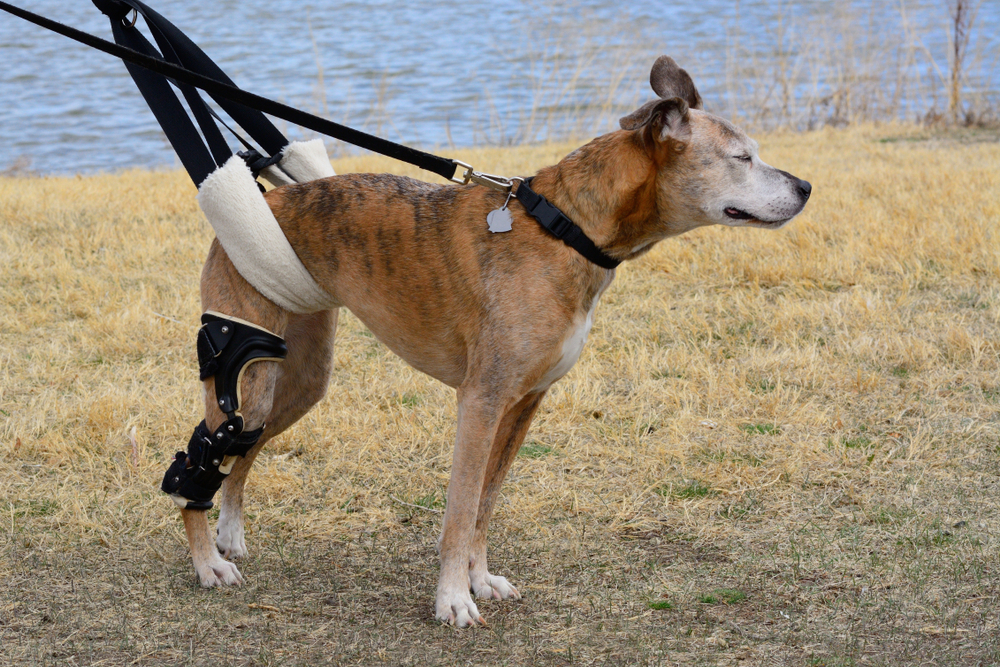
Surgery stabilizes the joint. Rehabilitation is where the function comes back: the muscle mass, the range of motion, the confidence to use the leg fully again. This is where Renew Pet Rehab plays a central role in your dog’s recovery.
Renew Pet Rehab’s surgery recovery programs are milestone-based, guided by certified rehabilitation professionals, and designed to protect the surgical site while steadily building back toward full activity. Sessions typically run 30 to 45 minutes, one to two times per week, and cover passive range-of-motion work, gentle strengthening, and home care instructions that carry progress forward between visits. The team is available to post-surgical patients referred from H-Town and from other veterinary practices, and your family is welcome to stay during sessions.
Underwater Treadmill Therapy
Hydrotherapy for dogs, specifically underwater treadmill therapy with adjustable jets, is one of the most effective early-recovery tools available after CCL surgery. The buoyancy of the water reduces the weight load on the healing joint while still allowing active muscle engagement, letting dogs begin rebuilding strength and normal gait patterns far earlier than they could on land. For dogs who are reluctant to bear weight on the operated leg, the underwater treadmill often bridges the gap between surgical recovery and land-based exercise.
Neuromuscular Electrostimulation (NMES)
Electrical stimulation therapy uses targeted electrical impulses to activate muscle groups that have become weak or inhibited following surgery. After a CCL repair, the muscles around the knee often stop firing normally in response to pain and disuse, and NMES helps restore that neuromotor connection before significant atrophy can take hold. It is particularly useful in the early recovery phases when your dog is not yet bearing full weight and active strengthening is limited.
Shockwave Therapy
Shockwave therapy uses acoustic pressure waves to stimulate tissue repair and reduce pain at a cellular level. It accelerates healing in tendons, ligaments, and bone, and reduces the chronic pain associated with post-surgical arthritis. For CCL patients managing both surgical recovery and pre-existing joint degeneration, shockwave provides targeted support that systemic medications cannot replicate.
Targeted Pulsed Electromagnetic Field Therapy (PEMF)
PEMF therapy delivers low-level electromagnetic pulses to damaged tissue, supporting cellular repair, reducing inflammation, and improving circulation in the area being treated. It is non-invasive, well-tolerated by most dogs, and can be used across recovery phases to promote tissue healing and comfort, particularly in areas where surgical swelling and post-operative inflammation need ongoing management.
Laser Therapy
Cold laser therapy reduces inflammation, decreases post-surgical pain, and promotes faster tissue healing through photobiomodulation, a process where specific light wavelengths stimulate cellular energy production in damaged tissue. It is a routine component of CCL recovery support at Renew Pet Rehab and is used consistently through the early and mid-recovery phases.
Chiropractic and Acupuncture
A dog protecting an operated leg compensates by shifting load to the opposite limbs and adjusting their posture throughout recovery. This compensation creates its own musculoskeletal tension, stiffness, and discomfort in the back, hips, and the other hind leg. Chiropractic and acupuncture address those secondary patterns directly, reducing pain and improving overall comfort and mobility throughout the recovery period.
Regenerative Medicine (PRP)
PRP (platelet-rich plasma) for dogs involves drawing a small amount of the dog’s own blood, concentrating the growth factors and healing proteins, and injecting them directly into the affected joint or surgical site. Regenerative medicine supports cartilage repair, reduces inflammation, and can be integrated into recovery plans at appropriate stages to promote better long-term joint health.
Home Exercise Plans
Recovery does not stop between appointments. Our team develops home exercise plans tailored to each dog’s current recovery phase, giving you specific exercises, activity guidelines, and progress markers to work with between visits. Knowing exactly what to do, and what to avoid, at each stage removes the guesswork and protects the repair during the most vulnerable window.
General post-surgical recovery milestones:
| Timeframe | Activity Level |
| Weeks 0-2 | Crate rest; leash only for bathroom breaks; incision monitoring |
| Weeks 3-6 | Gradual leash walks; underwater treadmill and laser therapy begin |
| Weeks 6-8 | Gentle rehabilitation exercises; range-of-motion work |
| Weeks 8-10 | Longer walks; light supervised play |
| Post-10 weeks | Gradual return to normal activity; closely monitored |
No running, jumping, or unsupervised play during recovery. Cones (e-collars) are an absolute necessity until the incision is healed to prevent your pet from reaching their surgical site. These guidelines protect the repair during the window when it is most vulnerable.
Surviving Crate Rest: What Actually Helps
Crate rest with an active Houston dog is one of the harder parts of CCL recovery for many families. Having realistic expectations and practical strategies makes a genuine difference.
- Position the crate where household activity is visible; isolation worsens anxiety
- Use food puzzles and stuffed enrichment toys for mental engagement without movement
- Take slow leash sniff walks within the bounds of your discharge instructions
- Keep a predictable daily schedule
- Ask our team about calming support if anxiety becomes a significant barrier
Surviving crate rest with your dog is genuinely manageable with the right approach. The first two weeks are the most critical and the hardest; holding that line protects everything that came before.
Long-Term Joint Protection
Movement, Weight, and Daily Habits
Warm-ups and cooldowns before and after activity should become permanent habits, not just recovery-phase practices. A five-minute slow walk before exercise prepares the joint; a gentle cooldown afterward prevents stiffness from setting in.
Weight control is among the most impactful long-term factors. Every pound above ideal body weight increases stress on the repaired knee, accelerates arthritis, and raises the statistical risk of injuring the opposite leg. For Houston dogs who spend significant time outdoors in warm weather, keeping weight optimal also supports overall cardiovascular health.
Dog hip and joint supplements provide nutritional support for cartilage health and comfortable joint movement through recovery and beyond. Omega fatty acids are a complementary option with well-established anti-inflammatory effects that support joint tissue over the long term. Ask our team which formulations are appropriate for your dog’s size and recovery stage.
Frequently Asked Questions About CCL Tears
Will my dog fully recover?
For appropriately selected patients who complete structured recovery, return to full or near-full function is the expected outcome. The timeline varies by procedure and dog size, but most dogs are resuming normal activity by three to four months post-surgery.
How do I know if the other leg is at risk?
There is no reliable predictor of which dogs will injure the second CCL. Weight management, consistent conditioning, and appropriate post-surgical activity progression reduce but do not eliminate that risk.
Is there anything I can do at home to prevent CCL tears?
Maintaining an optimal body weight and keeping exercise consistent rather than episodic are the two most modifiable risk factors. Consistent conditioning is better than intense weekend bursts of activity after sedentary weeks.
What makes recovery go better?
Dogs that complete structured rehabilitation protocols, whose families follow discharge instructions carefully, and who maintain a healthy weight during recovery consistently achieve better long-term outcomes than those who rush the process. This is exactly why Renew Pet Rehab exists.
Can I stay with my dog during rehabilitation sessions?
Yes, most of the time. We welcome families to stay during rehabilitation appointments. Being present often helps anxious dogs relax and engage more fully with the session.
Let’s Get Your Dog Back On Their Feet
A CCL tear is a serious injury and a meaningful disruption, but it is also one of the most successfully treated orthopedic problems in veterinary medicine. At Memorial Villages Animal Hospital, we coordinate care from diagnosis through recovery, with H-Town Veterinary Specialists next door for surgery and Renew Pet Rehab on-site for the full range of surgery recovery support your dog needs to get back to the Houston life they love.
If your dog has been limping or showing any of the signs above, call us or book an appointment online. The sooner we evaluate, the more we can protect the joint from the damage that accumulates with time.




Leave A Comment